
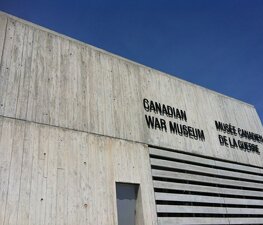

The Canadian War Museum (CWM) (Musée canadien de la guerre (MCG)) is Canada’s national museum of military history. Located in Ottawa, Ontario, the museum focuses on military conflicts that occurred on Canadian soil, involved Canadian forces, or had a significant effect on the country and its people. The conflicts range from early warfare among First Peoples to today’s “war on terror.”
Much of the museum’s public exhibition space is devoted to its Canadian Experience Galleries. These permanent exhibitions underline the profound effect war has had on Canada’s development and the significant role Canadians have played in international conflicts. The galleries also devote much attention to war’s impact on individuals: to what it calls the “devastating human experience” of war. Complementing the permanent galleries is a changing program of temporary or special exhibitions.
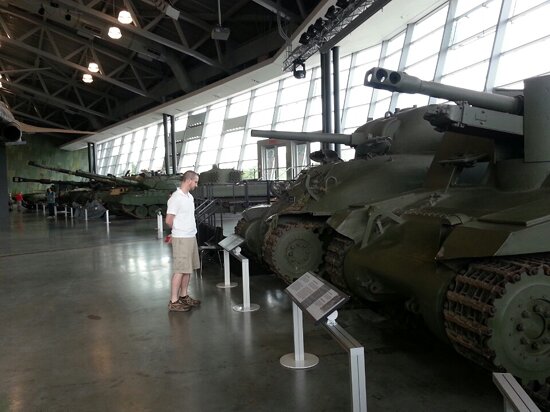
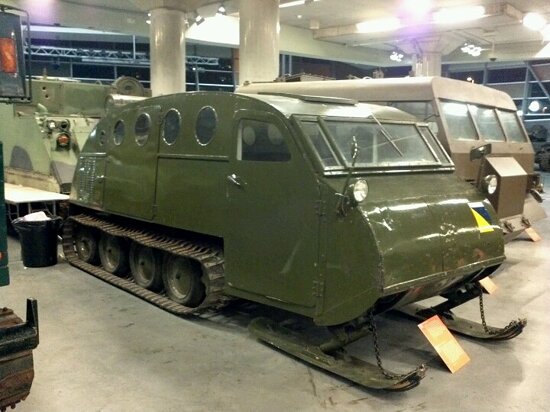
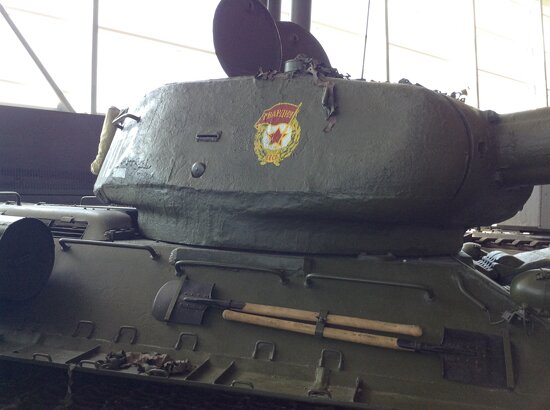
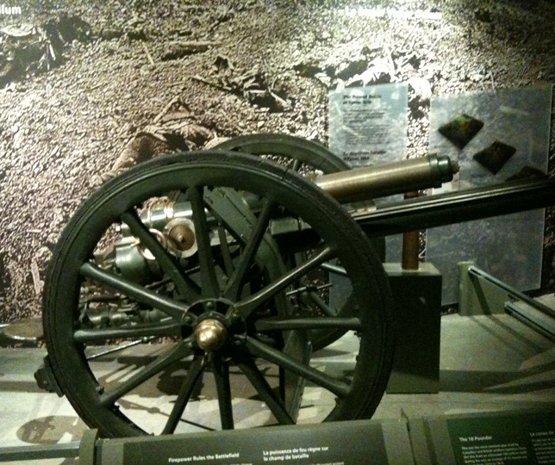
The CWM also houses the Military History Research Centre, a large collection of war art, and an extensive collection of military vehicles and artillery.
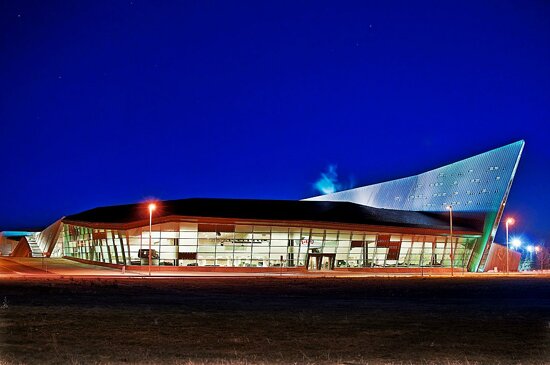
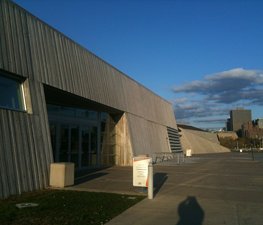
The CWM originated in 1880. Its current building opened in May 2005 is located less than 2 km west of Canada’s Parliament Buildings. The building's architecture has received professional and public acclaim.
Although the museum promotes remembrance of past conflicts and the sacrifices made by those in uniform, it is a public history museum, not a national war memorial or a museum of the Canadian Forces. The CWM is part of the Canadian Museum of Civilization Corporation, which also operates the Canadian Museum of Civilization, the Canadian Children's Museum, the Canadian Postal Museum, and the Virtual Museum of New France.
) on Sussex Drive, Ottawa.]] The museum originated in 1880 as a collection of military artifacts in the possession of the Canadian federal government, organized by militia officers of the Ottawa garrison. Its first facility was a series of rooms in the Cartier Square Drill Hall. The collection was later adopted by the Public Archives of Canada. The Canadian War Museum was officially established in 1942. The collection of war artifacts gained its own dedicated facility in 1967 when it moved to the former Public Archives building on Sussex Drive in Ottawa. That location was considered to be too small for the museum's growing collection which had to mostly be stored at a west-end Ottawa warehouse known as Vimy House.
In the 1990s, the government made plans to relocate the War Museum to a new site east of central Ottawa, however the proposed site was criticized for its distance from downtown core and a more prominent location on the Ottawa River was selected, west of Parliament Hill. The new location also allowed for ceremonial processions between the National War Memorial and the new War Museum.
The new facility, designed by a joint venture of Moriyama & Teshima Architects of Toronto and Griffiths Rankin Cook Architects of Ottawa, was opened in May 2005. The new, modern building emerges eastward from the ground, with textured concrete reminiscent of a bunker, but with rooftop gardens consistent with the museum's theme of regeneration. The building rises to a large fin, clad in copper that matches the rooftops of other prominent public buildings in the capital. The small windows on the fin spell out in Morse code Lest we forget (in English) and N'oublions jamais (in French). The copper used on the interior of the building is the replaced copper roof from the Library of Parliament, which itself was refurbished in 2004.
Two paintings displayed in the Canadian War Museum depicted atrocities committed by Canadian soldiers. One involved the torture of Somalian teenager Shidane Arone in 1993 by a member of the Canadian Airborne Regiment, Master Corporal Clayton Matchee. The other painting was one of Private Kyle Brown, convicted for his role in the same event. The paintings were considered inappropriate as part of the nation's historical museum by the head of one of the country's veterans associations. Other veterans disagreed and said it was more important that the Canadian War Museum play its proper role in portraying the realities of the war in which Canadians were involved. The Museum stated it did not intend on changing the display despite the disapproval of some war veterans.
The text displayed on the Bomber Command exhibit was the source of another controversy, some veterans group felt Canadian veterans were portrayed as war criminals who needlessly killed thousands of civilians in Germany through a bombing campaign. The exhibit's plaque - which specifically refers to the Bombing Campaign of German cities such as Dresden, reads as follows:
"The value and morality of the strategic bomber offensive against Germany remains bitterly contested. Bomber Command's aim was to crush civilian morale and force Germany to surrender by destroying its cities and industrial installations. Although Bomber Command and American attacks left 600,000 Germans dead and more than five million homeless, the raids resulted in only small reductions of German war production until late in the war."
The veterans group demanded the text be changed so that it would read as follows:
"Thousands perished in the raids and millions were left homeless. While these numbers are very large, they pale in comparison to the genocide perpetrated...by the Germans and their proxies."
People against altering the plaque charged that the veterans' suggested replacement text proves that they had a political agenda, and not a historical one.
The veterans group using political pressure were successful in having the text changed. This move has generated outrage among historians, educators, and some war veterans, who say the exhibit was factually accurate.
Most of the museum’s main floor is devoted to the Canadian Experience Galleries.
This gallery looks at the earliest wars of Canada, many of which were pre-Confederation. Beginning with First Peoples Warfare, it highlights the New Alliances between the Natives and Europeans, and the resultant Clash of Empires. Other events that impacted Canada and also exhibited are The American Revolution, The War of 1812. The gallery ends with the Conflict and Confederation.
The museum progresses chronologically into the period from 1885 to 1931, beginning with The South African War. The First World War and its battles that Canadian soldiers were involved in, including the The Western Front, In the Trenches, Vimy, and Passchendaele. other exhibits are the Costly Victory, and Aftermath.
This gallery looks at Adolf Hitler (whose personal limousine is on display and labeled "a symbol of evil"), also on display is information regarding Benito Mussolini, and Hideki Tojo. Continuing through the gallery, visitors will find the displays of the Battle of the Atlantic, Japan Strikes in the Pacific, The Home Front, Dieppe, The Air War, Italy and Normandy, Liberation and Victory. Homecoming is the final exhibit of the gallery.
Following World War II Canada's peace time efforts are described in gallery 4. The exhibits include A Violent Peace beginning with Welcome Home, showing the rise of suburban Canada. The exhibits also include From World War to Cold War, Korea, NATO, NORAD, U.N. Peacekeeping, The Cold War at Home, Cold War Twilight, and The Savage Wars of Peace.
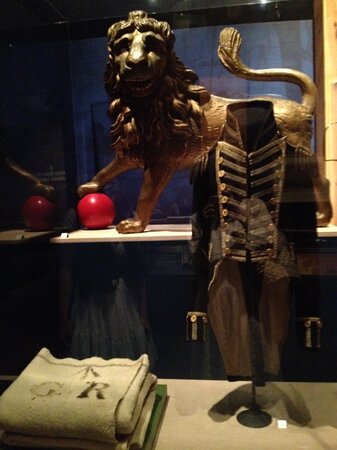
Displayed in this exhibition hall are military honours, certificates of service, works of art, Remembrance Day poppies, and other material objects used by Canadians to remember and commemorate their military past and to honour those who have worn a Canadian uniform. Among the highlights is the original plaster model for the National War Memorial in Ottawa.
These rooms feature the plaster casts (maquettes) of the constructs which were incorporated into the design of the Canadian National Vimy Memorial of the Canadian forces attacking and taking Vimy Ridge during World War I.
On display in this exhibit is a large collection of vehicles used in wars or conflicts in which Canada had a presence. The display includes:
This list is non-exhaustive; some of the vehicles and equipment on display lack descriptive signage, and are therefore difficult to identify.
of Australia and New Zealand lay wreaths at an ANZAC Day service in front of Memorial Hall.]] Located outside the ticketed exhibition area. The museum describes the Memorial Hall as "a space for quiet remembrance". It contains a single artifact: the headstone of the Unknown Soldier from the First World War. Sunlight through the Hall’s only window directly illuminates the headstone every Remembrance Day, November 11, at precisely 11:00 a.m.— the moment the Great War ended in 1918.
While not part of the main tourist experience, the Research Centre provides a wealth of information for those wanting to study Canadian warfare in greater depth.
The three most recent directors of the War Museum are:
The current director:
The Museum is affiliated with: Canadian Museums Association, Canadian Heritage Information Network, Organization of Military Museums of Canada and Virtual Museum of Canada.